Magicians will tell you the secret isn’t the trick.
It’s the attention.
The trick works because you’re looking at the wrong hand.
While you’re watching the dramatic gesture, the flourish, the smoke, the distraction, something quieter is happening somewhere else. Something small. Something precise.
By the time you notice it, the rabbit is already out of the hat and everyone is applauding.
Life, I’ve started to suspect, works in a remarkably similar way.
We think the big moments are the story, the promotion, the breakup, the move, the milestone, the sudden clarity that arrives like a lightning bolt.
But those are just the flourish.
The real trick has usually been happening somewhere else entirely.
The slow shift in your standards.
The quiet erosion of a belief you used to defend fiercely.
The moment you stopped trying to convince someone to treat you well.
Those are the things that change the outcome.
But we don’t see them at first.
Because we’re looking at the wrong hand.
For a long time I believed the smoke and mirrors were other people’s doing.
The polished lives on display.
The curated certainty.
The effortless success that seemed to arrive for everyone else while I was still rearranging the furniture of my own decisions.
It felt like there was a trick I hadn’t been taught.
Somewhere there were instructions, the real ones, and I had missed the day they were handed out.
But the longer I live, the more suspicious I become of obvious illusions.
Because the truth is a little more unsettling.
Most of the smoke and mirrors in our lives aren’t created by other people.
They’re created by us.
Not maliciously.
Not even consciously.
Just… strategically.
We tell ourselves stories that make the present moment easier to live inside.
That relationship will get better.
That job will eventually feel meaningful.
That once we reach the next milestone everything will settle into place.
Sometimes those stories help us move forward.
Sometimes they help us stay longer than we should.
But either way, the mechanism is the same.
The trick works because you’re looking at the wrong hand.
You’re watching the potential.
The promise.
The imagined version of the future.
Meanwhile, reality has been quietly placing its cards on the table the entire time.
Not dramatically.
Just consistently.
What someone actually does.
How something actually feels.
The subtle but persistent sense that something isn’t quite right.
Reality rarely hides.
We just prefer the illusion.
Because illusions are kinder in the short term.
Potential is easier to love than truth.
Hope is easier to hold than acceptance.
Possibility is far more comfortable than limitation.
The smoke softens the outline of things.
The mirrors let us see what we want to see.
And to be fair, sometimes that’s necessary.
Sometimes the illusion is what gets you through the door.
What gives you the courage to try.
What allows you to believe in something before there’s evidence.
But eventually, the trick ends.
The smoke clears.
And the moment arrives when you finally look at the other hand.
The one that’s been quietly telling the truth the whole time.
This is the part people don’t talk about much.
Because losing the illusion isn’t purely triumphant.
Sometimes it’s a little sad.
There’s a grief that comes with seeing clearly — the quiet realization that something you believed in wasn’t quite what it appeared to be.
A future that looked certain becomes conditional.
A person you trusted reveals their limits.
A dream changes shape.
For a moment, you almost wish the trick still worked on you.
Illusions have their comforts.
But clarity has its own kind of relief.
Because once you see the mechanism, you stop waiting for magic.
You stop confusing spectacle with substance.
You stop applauding the flourish.
You start paying attention to the hands.
And this, I think, is one of the quieter transitions into adulthood.
Not the age.
Not the milestones.
Just the gradual realization that life is full of smoke and mirrors, and the steady decision to look anyway.
Eventually you stop asking where the rabbit came from.
You start asking why you were so willing to believe in the hat.
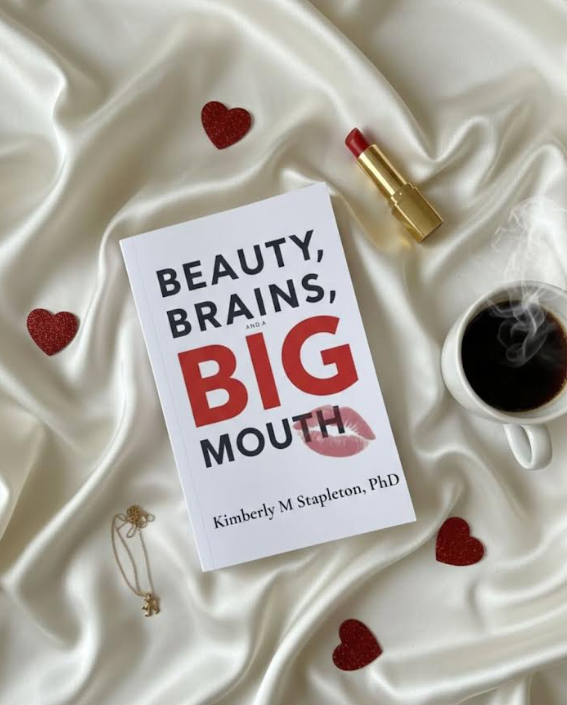
 Beauty Brains and a BIG Mouth